Beach Buggy Racing 2
Popular Games
Last Played
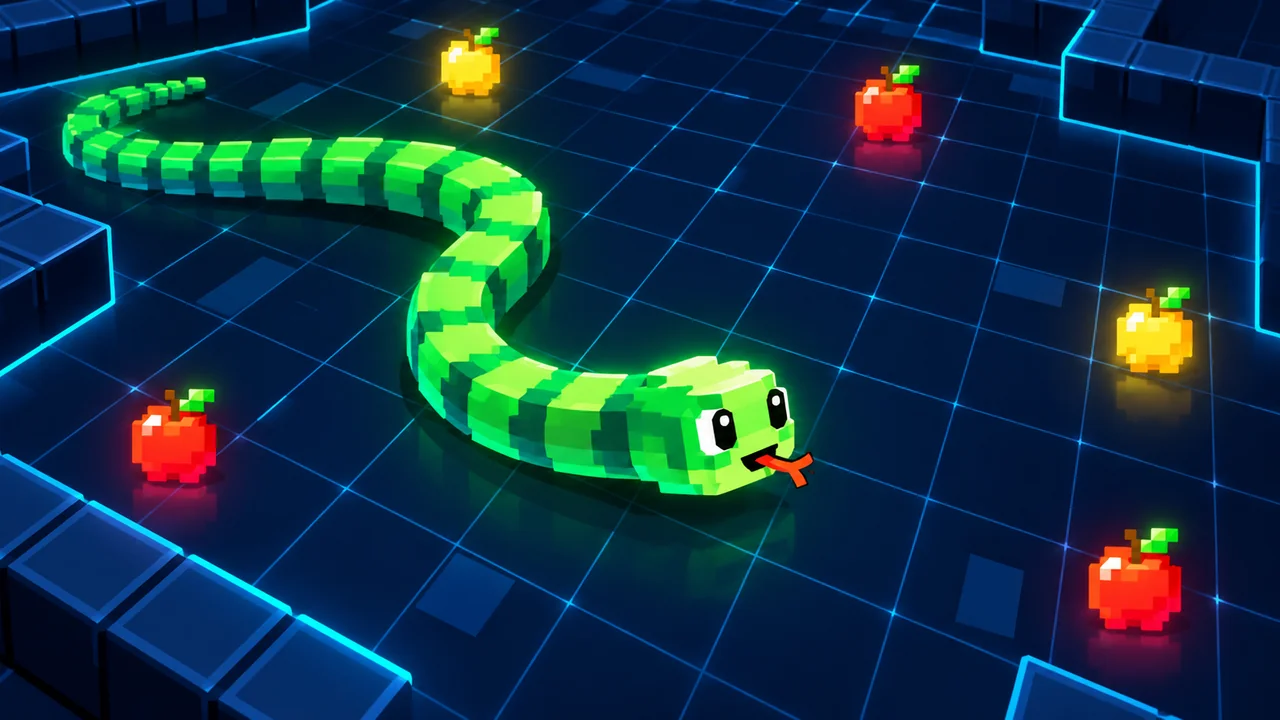
Classic Snake looks simple because its controls are simple: steer, collect food, and stay alive. The challenge changes as the tail grows. A turn that felt harmless a few seconds earlier can close the only open route, and chasing the next fruit can leave the head boxed in. Better runs come from reading the board, choosing a path with an exit, and adjusting that plan before space disappears.
There is no single route that works in every version. Some games add walls, portals, speed changes, or different turning rules, while others keep a clear grid. Treat the ideas below as a flexible method: learn the rules of the version you are playing, then make each move serve both the next pickup and the space you will need afterward.
At the start of a run, pause long enough to notice the board's shape. Identify the edges, fixed obstacles, narrow passages, and the largest open areas. Check where the snake begins and where the first food appears. You do not need to calculate every square. A quick scan is enough to avoid steering into a corner or committing to a corridor before you understand how you will leave it.
Also notice how quickly the game advances. If movement happens one tile at a time, you can plan several turns ahead. If the pace rises as your score grows, keep the plan shorter and make frequent checks. Knowing whether an opposite-direction turn is rejected, ignored, or treated as a collision is useful too. Test unfamiliar controls early, while the snake is short and the board is forgiving.
Food is the immediate goal, but the route to it matters more than the distance shown by the grid. Before turning toward a pickup, trace a safe path in your mind: where will the head travel, where will the body be, and which direction can you take next? A fruit one step away is a poor choice if collecting it leaves you facing a wall of your own tail. A longer route can be safer when it preserves open squares.
Prefer broad curves over repeated sharp turns. Smooth movement is easier to read and leaves fewer awkward pockets where the head can become trapped. On an open board, a loose circuit around the perimeter can keep space predictable. On a crowded board, a smaller loop through a clear region may be better. The point is not to follow a perfect pattern; it is to have a planned exit before entering a tight section.
As the snake grows, think of the empty board as a resource. Try to preserve at least one connected route through open space instead of splitting the remaining area into isolated pockets. A path that looks open near the head may soon be sealed by the body behind it. Before crossing your own trail, ask whether the tail will move out of the way before you need to pass through again.
When you have room, leave a buffer between the head and the body. That buffer gives you time to correct a turn if the next food appears in an inconvenient place. Avoid weaving across the middle without a reason; each crossing can divide the board and make later choices harder. If you must cross, do it where the tail is already moving away and where another route remains available.
Corners are useful because the walls limit the number of directions you must watch, but they can also become traps. Enter a corner only when you know how you will leave it. A turn along the outer edge can be safe with a short snake and dangerous with a long one if the tail has filled the next row. Keep enough room to make the turn without running into your own body.
Do not treat the edge as automatically safe. If your game has no obstacles and the snake is short, the perimeter may offer a simple route. Later, the head can meet a section of tail that has not cleared yet. Recheck the space each time the snake length changes. A reliable route is one that remains open as the body moves, not one that looked clear several seconds ago.
Every food pickup changes the board because the snake gets longer. That means the route you used to reach the fruit may no longer be safe to repeat. After collecting food, take a moment to reassess: how much open space remains, where is the tail moving, and which side of the board has room for the next turn? This small reset prevents a common mistake: continuing an old plan after the conditions have changed.
If two pickups are available, choose the one that keeps the widest safe path, not automatically the closest one. Some versions award bonuses or introduce timed items; decide whether the reward is worth leaving your route. A missed bonus is usually less costly than a collision. When the snake is long, survival is progress. You can take more ambitious lines again when the board opens up.
When movement speeds up, reduce the number of decisions you make at the last moment. Use familiar loops and predictable turns, then look ahead for the next change in direction. Do not wait until the head reaches a wall to decide what to do. At the same time, avoid planning so far ahead that you ignore a new obstacle or pickup. Good control balances a simple route with regular checks.
If the game becomes difficult after a long run, focus on the next safe turn rather than the final score. Short planning horizons lower pressure: identify the nearest hazard, make one clean move, and scan again. This keeps attention on useful information instead of the length of the tail or how close you are to a record.
Replaying the same version can build a feel for its movement rhythm, but each attempt is more useful when it has a small focus. One run can be about avoiding sudden reversals. Another can focus on leaving a clear exit after each pickup. You might practice taking turns without hugging the wall, or learn how a particular obstacle changes the available routes. A specific goal makes it easier to notice what worked.
After a collision, remember the decision that led to it. Was the turn made too late? Did the head cross a path before the tail cleared? Did you chase food into a narrow pocket? Make one adjustment on the next attempt instead of changing everything. This turns a short game into a practical lesson and helps distinguish an unlucky moment from a repeatable planning problem.
Arcade runs reward quick reads, while puzzle-style snake games let you slow down and think through a path. If you want to practice looking several moves ahead, try Snake Way, which centers its challenge on guiding a snake through puzzle paths and obstacles. The format is different from a classic high-score run, but the habit of checking where each turn leads carries over: look for a route that reaches the goal without closing the way out.
Turning toward food without checking the next turn is the most tempting mistake. Another is making a tight loop simply because it worked when the snake was shorter. Repeating a route after every pickup ignores how the body has changed. Finally, steering in panic often creates a second problem before the first one is solved. Slow down when the rules allow it, keep a little space, and choose a move you can explain before you make it.
It also helps to separate risk from progress. A high score is satisfying, but a run that ends after a deliberate experiment can still teach you something. If a risky shortcut fails, you have learned which passage closes too early. If a safer circuit lasts longer, you have found a pattern worth keeping. Over time, those observations become quicker decisions.
Before moving, scan the edges and obstacles. When food appears, choose a path that leaves an exit. After collecting it, reassess the tail and open space. Before entering a corner or crossing your own trail, check whether you can get back out. If speed increases, simplify the route and decide the next turn early. After a collision, identify one choice to improve on the next attempt.
That routine is intentionally small. You do not need to map the whole board or predict every movement. You only need to keep asking whether the next turn preserves a safe option. As the snake grows, that question becomes more valuable than chasing every pickup as quickly as possible.
Strong Snake play is less about perfect reflexes than about keeping choices available. Read the board, plan a route with an exit, and let each pickup update your thinking. Use corners when they help, leave space around the body, and shorten your planning horizon when the pace rises. With practice, the board feels less like a maze that is closing in and more like a space you can organize one safe turn at a time.